


The American Ceramic Society (ACerS) will be recognizing the accomplishments of five MatSE faculty members. They will be delivering special lectures or receiving awards during MS&T20 conference, which will be held virtually Nov. 2-6.
Content Administrator
Welcoming new faces to MatSE
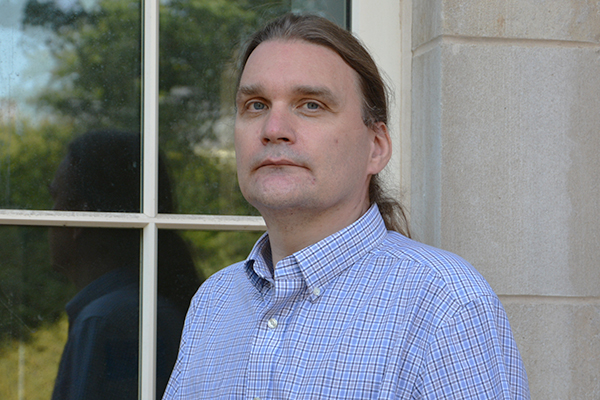 André van der Vlies is an assistant research professor who is currently working on polymer-based solar cells. Prior to joining Penn State, he was at Kansas State University where he developed a high-throughput system to retrieve and isolate bacteria from microwell arrays using photodegradable hydrogel materials.
“In my research at Penn State, I am seeking to design and synthesize light-harvesting materials for use in solar cells,” said van der Vlies.
He received his M.S. in chemistry from the University of Amsterdam, Netherlands. He earned his Ph.D. in chemistry from the Swiss Federal Institute of Technology Zurich (ETH), Switzerland, researching the sulfidation reaction of tungsten oxides using different spectroscopic techniques. He then worked as a postdoctoral fellow in the lab of Professor Jeffrey Hubbell at ETH and Swiss Federal Institute of Technology Lausanne, Switzerland, where he worked on developing polymeric materials for use as synthetic vaccines and drug delivery applications. He also worked in the Department of Applied Chemistry at Osaka University, Japan, as a research fellow researching gasotransmitter-releasing polymeric micelles for drug delivery applications.
Welcoming new faces to MatSE
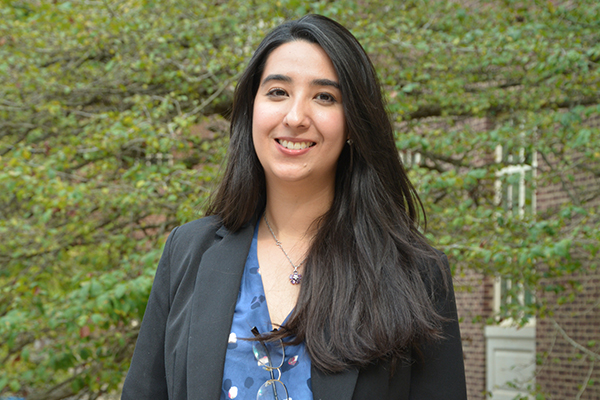 Maria Higgins is an assistant teaching professor. Prior to joining Penn State, she was a postdoctoral fellow in the Department of Mechanical and Nuclear Engineering at Virginia Commonwealth University (VCU).
"Penn State has made history in materials science and engineering through groundbreaking research in ferroelectrics, glasses, carbon-based materials, among many others,” said Higgins. “With my position as teaching assistant professor, I hope I can train students in different laboratory techniques to produce the next generation of pioneers in the field."
Higgins’ research has several focuses. She investigates the photochemical properties of semiconductors and noble metals for radiation therapy and water decontamination that have been activated by ionizing radiation (UV light, x-rays, and gamma rays). Another research interest is the investigation of clean and environmentally friendly nanomaterial fabrication methods. Some examples include x-ray and gamma ray induced synthesis, deposition-precipitation. Also, at the macroscopic scale, she studies the microstructural evolution and mechanical properties of chromium coated zircaloy under proton irradiation, to enable its use as accident tolerant fuel cladding material in nuclear reactors.
She received a B.S. in mechanical engineering from the National University of Colombia, and a Ph.D. in mechanical and nuclear engineering from VCU.
Welcoming new faces to MatSE
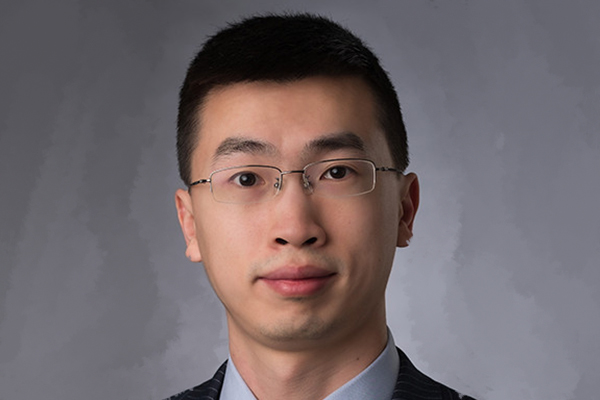
is an assistant professor and a 2020 Institute for Computational and Data Sciences Faculty Fellow. Prior to joining Penn State, he worked as a research scientist at Siemens Corporate Technology. There, his research initiatives focused on computational geometry, knowledge representation, and exploiting the structure-function relationship in manufacturing contexts.
Reinhart’s research is interdisciplinary by nature and uses a data-driven approach to facilitate the design, manufacture, and maintenance of advanced materials, whose sought-after functions and properties will be derived from their yet-unknown internal structure. This relationship between structure and function is challenging to understand and even harder to predict because it is nonlinear, high dimensional, and results from physical phenomena at many scales. Traditional materials design has relied on human intuition to interpret patterns in known structure-function pairs and infer new materials with similar and hopefully improved properties, Reinhart’s group aims to use a combination of high-performance physics simulation and data science approaches to arrive at efficient representations of materials that will enable true inverse design of micro-structure.
“This means I use conventional, physics-based simulations to understand the way materials behave at the micro-, meso-, and macro-scales, but augment our predictive capability using machine learning to find new and improved materials for a variety of applications,” said Reinhart. “These can include new metals for additive manufacturing, semiconductors for optical computing, or even new building materials for homes or transportation infrastructure.”
Reinhart received his B.S. in chemical engineering from the University of Minnesota Twin Cities. He attended Princeton University on a National Defense Science and Engineering Graduate Fellowship, where he worked on strategies for predicting, understanding, and controlling colloidal crystallization using large-scale computer simulations and machine learning methods, obtaining his Ph.D. in 2019.
Learn more about the Reinhart Group
|
|
||||||||||||||||||||||||||||||||||||||||||||||||||||||||||||||||||||||||||||||||||||||||||||||||||||
|
||||||||||||||||||||||||||||||||||||||||||||||||||||||||||||||||||||||||||||||||||||||||||||||||||||








Welcoming new faces to MatSE
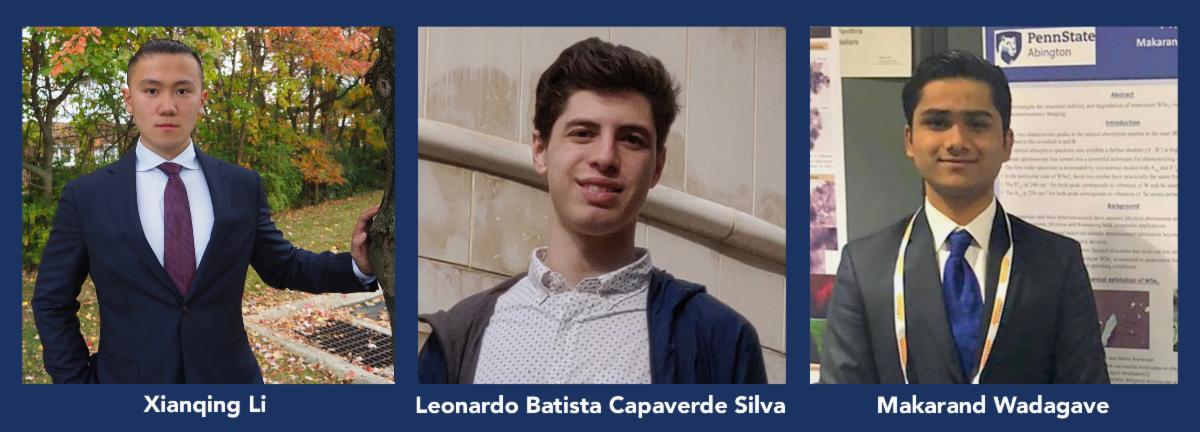
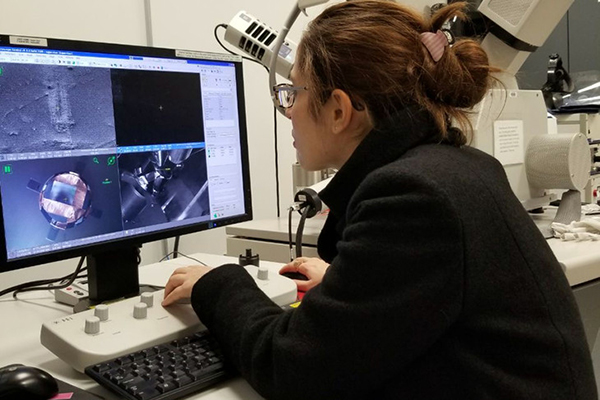
Darren Pagan is an assistant professor and an associate with the Institute for Computational and Data Sciences. Prior to joining Penn State, he was a staff scientist overseeing the structural materials and mechanics program at the Cornell High Energy Synchrotron Source (CHESS). At CHESS, he oversaw the design, construction, and commissioning of the Structural Materials Beamline (SMB) and the Forming and Shaping Technology Beamline (FAST).
“I am very excited to start in the department. The rich materials research across campus and Penn State’s long history studying structural materials make the University a great place to join. I’m looking forward to contributing to this strong tradition through my research program. I focus on innovative, data-driven characterizations to design mechanically superior systems and improve the safety and economic use of existing materials systems.”
Specifically, Pagan’s research focuses on developing data analysis methods for quantifying material deformation, integrating mechanical and scattering models, and expanding experimental capabilities for characterizing microstructure evolution during processing and performance testing of metallic alloys and composites. The goal of his research is to extract quantitative measures of microstructure evolution in-situ to develop, calibrate, and validate computational models and to accelerate the design of superior material systems.
Pagan earned a B.S. in mechanical engineering from Columbia University in 2010 and his Ph.D. in mechanical engineering from Cornell University in 2016. His dissertation research focused on developing crystal kinematic and scattering models for quantifying heterogeneous plastic deformation in single crystals during thermo-mechanical loading from in-situ x-ray data. As a postdoctoral researcher at Lawrence Livermore National Laboratory, Pagan developed new methods for integrating diffraction data with crystal plasticity finite element modeling and used x-ray techniques to characterize granular material deformation in-situ under quasi-static and dynamic loading conditions.
Welcoming new faces to MatSE
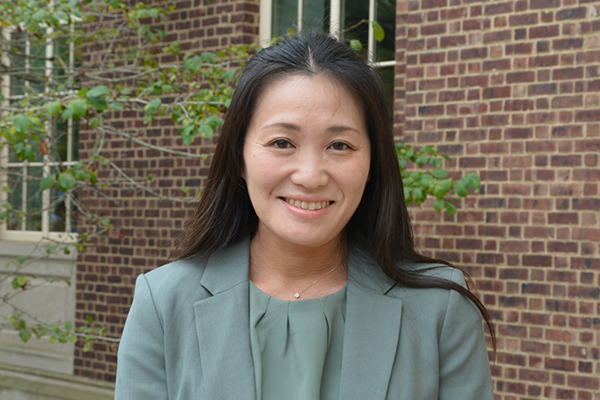 Urara Hasegawa is an assistant professor. Prior to joining Penn State, she was an assistant professor in the Department of Chemical Engineering at Kansas State University.
Her research focuses on the development of polymeric nanomaterials for controlled delivery of drug and bioactive signaling molecules. Her particular interest is on endogenous generation of reactive oxygen species and gasotransmitters such as nitric oxide, carbon monoxide and hydrogen sulfide and their biological activities.
“In my research, I am seeking to develop drug delivery systems for targeted and controlled delivery of therapeutic agents by applying the fundamental principles of polymer chemistry, materials science, biology, and biomedical science,” said Hasegawa.
Currently, her group is developing polymeric nanomaterials that can generate, scavenge, or respond to these molecules. Her work includes design and synthesis of polymeric nanomaterials using various polymerization techniques, such as reversible addition-fragmentation transfer (RAFT) polymerization and aqueous dispersion polymerization, and biological evaluation of these nanomaterials in cell culture and biological systems. These polymeric nano-platforms are useful not only for therapeutic applications but also for unveiling the physiological or pathological roles of these tiny bioactive molecules in the human body.
Hasegawa received her B.S. and M.Eng. in applied chemistry from Waseda University, Japan. She earned her Ph.D. in biomedical science from Tokyo Medical and Dental University, Japan, and then, worked as a postdoctoral fellow with Professor Jeffrey Hubbell at the Swiss Federal Institute of Technology in Lausanne, Switzerland. She joined the Department of Applied Chemistry at Osaka University, Japan, as an assistant professor in 2011.
Learn more about the Hasegwawa Research Group
Five new faculty members have joined the Department of Materials Science and Engineering (MatSE) at Penn State in 2020—three tenure-line faculty, one assistant teaching professor, and one assistant research professor.
“I am delighted that these outstanding faculty have joined the department,” said Susan Sinnott, professor and head of the department. “Their unique expertise will enable the development of novel materials, advance our educational mission, and strengthen materials science and engineering at Penn State.”
Penn State is committed to and accountable for advancing diversity, equity, inclusion and belonging in all of its forms. We embrace individual uniqueness, foster a culture of inclusive excellence that supports both broad and specific diversity initiatives, leverage the educational and institutional benefits of diversity, and engage all individuals to help them thrive. We value inclusive excellence as a core strength and an essential element of our public service mission.