



Lawrence F. Hancock will receive the 2020 R.E. Tressler Award and deliver the Tressler lecture Thursday, Feb. 27 in 101 Chambers Building at University Park.
Administrator
Lawrence F. Hancock will receive the 2020 R.E. Tressler Award and deliver the Tressler lecture Thursday, Feb. 27 in 101 Chambers Building at University Park.

Allison Beese, associate professor of materials science and engineering and mechanical engineering, and Timothy Simpson, Paul Morrow Professor of Engineering Design and Manufacturing, for “Machine learning identification of process-structure-property links in additively manufactured Ti-6Al-4V.”

John Creek, Ph.D.
R&D DIRECTOR, GLOBAL HEALTH DISRUPTIVE INNOVATION
RB
Abstract
The global fast moving consumer goods (FMCG) industry serves some of the most competitive markets in the world. Changing consumer demographics, new brands, and external market forces all impact in-market success. In particular, the high rate of change and development of new technologies (including digital) in the consumer health segment are leading to an increasingly complex market landscape. Transformational innovation in this space requires a cross-functional mindset and an interdisciplinary scientific and consumer-centric approach to product development. This retrospective will discuss successes and failures in applying new technologies and consumer insights to product and category creation as well as the necessity to stay rooted and committed to driving the science behind the product forward.
Bio
John earned a Ph.D. in Materials Science & Engineering at the Pennsylvania State University in 2007 following a B.S. in Chemical Engineering (cum laude) at Washington & Lee University. He joined the RB (formerly Reckitt Benckiser) R&D team based in Montvale, NJ in the same year. After completing a series of product development roles in the Germ Protection R&D and Technology Innovation teams John was appointed Manager on the global Outside Innovation (2012) and Disruptive Innovation (2015) teams. Since 2018, John has led the RB Health Disruptive Innovation team within the Emerging Sciences & Technology R&D category. In this role, he is responsible for strategic innovation project inception, execution, and delivery – supporting existing RB Health brands as well as new strategic white space initiatives. The highly cross-functional Disruptive Innovation team is RBs internal start-up powerhouse, collaborating with R&D, marketing, and commercial teams to drive forward RBs ambition to provide innovative health care solutions for consumers; both nurturing the best start in life and adding healthy years to life. This is accomplished using partnerships, external and internal, to bring the best science-led product and digital innovations to our consumers.
At RB John has been instrumental in the launch of multiple consumer products in the Health and Hygiene segments and is currently focused on the implementation of a science-driven ecosystem-based approach to innovation within the Health segment, bringing together multiple disciplines, from chemistry to materials to digital, to deliver boldly innovative solutions that create new value in consumer health categories.

Jeffrey M. Breznak M.S.
Manager, Steam Turbine and Generator Materials
GE

Lucille A. Giannuzzi, Ph.D., FAVS, FMSA
President
L.A. Giannuzzi & Associates LLC, Fort Myers, FL.
Abstract
Focused ion beam (FIB) microscopy, specimen preparation, and nanoprototyping has witnessed numerous advances over the past 20+ years. First perceived as an expensive novelty, the FIB currently offers necessary and indispensable capabilities for any major research university, company, or national laboratory. FIB usage for site specific milling and deposition is now status quo. Standard specimen preparation protocol exists for high resolution transmission electron microscopy and other characterization analyses requiring minimal surface damage. Over the years, these techniques improved with an understanding and application of the fundamentals of ion-solid interactions. Successive FIB slicing followed by imaging and associated analytical methods enable 3D tomographic materials characterization containing morphology, microstructure, chemistry, and crystallography. The automation of these functions improves reliability, statistics, and throughput. Despite its maturity, FIB instrumentation and applications continue to develop. New sources emitting different ions species and beam currents allow materials characterization across the nano-, micro-, and macro- length scales. In this lecture, the evolution of FIB for materials characterization will be presented. Attention will be given to discoveries of structure/property relationships in materials possible only by FIB. In addition, the future of FIB will be discussed. Examples from metals, ceramics, polymers, composites, integrated circuits, minerals, biomaterials, and nuclear irradiated materials will be provided.
Biography
Lucille A. Giannuzzi holds a B.E. in Engineering Science and M.S. in Materials Science and Engineering from Stony Brook University. She received her Ph.D. from Penn State in Metals Science and Engineering and was a Post-Doc at the PSU Center for Advanced Materials. Prof. Giannuzzi was at the University of Central Florida for 10 years where she was a recipient of an NSF CAREER award. She joined FEI Company as a product marketing engineer for 7 years before founding her own consulting and product companies. Dr. Giannuzzi has applied focused ion beam and electron microscopy techniques to study the structure/property relationships in metals, alloys, ceramics, composites, polymers, minerals, bone/dental implants, irradiated, inorganic, and biological materials. She maintains professional affiliations in AVS, ACerS, ASM Intl., TMS, MRS, MSA, and MAS and is a Fellow of AVS and MSA. Dr. Giannuzzi has over 125 (co)authored publications; several FIB-related patents, contributed to several invited book chapters, and is co-editor of a book entitled “Introduction to Focused Ion Beams.”
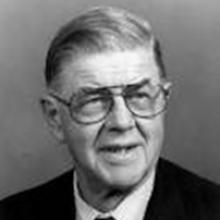
John MacChesney
Retired, Bell Laboratories
Most of the 48 years at Bell Laboratories were spent processing materials: the early decade crystalline oxide searching for desirable electronic and magnetic properties; later years glass suitable for drawing fiber. The crystalline oxide ie, perovskites yielded numerous journal articles but were of modest commercial value. The glass was more successful on both accounts.
Worldwide early glass efforts were centered and common glass compositions soda-lime silica, for instance. By the late 1950's melting purified glass composition in the open, crucibles, furnace atmospheres negated the benefits of purification.
We started using vapor sources (SiCI4, GeCI4) reacted with oxygen is a silica tube heated externally. As work progressed, we revised our methods to include thermophoresis, chloride complexation and sol-gel leading to performs from which fiber is drawn. Support for the project was provided by self-assembled staff members who determined the physics and chemistry involved. Its should be noted that the Laboratories, culture not only encouraged such "bottom-up" projects and supported them along with core projects from above.
Bio
Upon receiving a Ph.D., John B.MacChesney joined Bell Laboratories where he engaged in research on ceramics and single crystals of interest for their electrical or magnetic properties. In 1972, his attention turned to glass, specifically, to produce vitreous silica of purity and configuration needed for optical fibers. This resulted in the invention of the Modified Chemical Vapor Deposition (MCVD) process used worldwide to produce a significant fraction of the presently installed fiber. Later, his work concentrated on means to deliver erbium or other rare-earth ions to a process for making amplifier fibers. Concurrently, together with D. W. Johnson Jr., they demonstrated a sol-gel process for making large silica cylinders which was developed for commercial fiber production.
He is, generally, regarded as a materials scientist and innovator credited with approximately 125 publications and a like-number of domestic patents for the processing of photonic components. he received national and international recognition which includes: The Commonwealth Award do designated by the Society of Sigma Xi, the Tyndall Award by the Optical Society of America/Institute of Electrical Engineers, The Charles Draper Award by the National Academy of Engineers of which he is a member. He is also a member of the (world) Academy of Ceramics which named them as recipients of the 2000 Ceramics Award.
Other recognitions include the Engineering Achievement Award by the American Society of Metals, The Morris Liebman Award by the Institute of Electronic Engineers, the John Jeppson by the American Ceramics Society and the 2012 Stookey Lecture of Discovery Award by that society. From the American Physical Society, The International Prize for New Materials; from Penn State, the Hosler Award and from the Materials Laboratory award for Distinguished Alumni. In 1990, he received The Thomas Alvah Edison Patent Award by the Research and Development Council of New Jersey and in 1993, the Inventor of the Year by The Jersey Inventors Hall of Fame.
Dr. MacChesney received a BA degree from Bowdoin College and a PhD from Penn State. He served as adjunct professor at The Kwangju Institute of Science and Technology (Korea) and as liaison between the Materials Engineering Section of NAE. His entire career of forty-eight years was spent at Bell Laboratories and its successor.
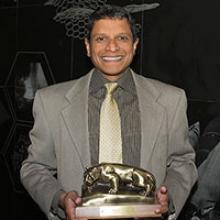
Yeshwanth Narendar
Vice President, Technology, Roofing
CertainTeed Corporation

Vladimir Ban
CEO
PD-LD, Inc.
Vladimir Ban received his undergraduate degree from the University of Zagreb, Croatia in Chemical Engineering, and his Ph.D. from the Pennsylvania State University in Materials Science. He started his scientific career at RCA Laboratories in Princeton, New Jersey. He specialized in the science and technology of semiconductor materials, such as silicon and gallium arsenide, which became the foundation of today’s computer and communication industries. Vladimir has authored over 80 scientific articles and has over 30 US Patents granted or pending.
In 1984 Vladimir and his colleague Dr. Gregory Olsen founded Epitaxx Inc., a company dedicated to manufacturing of indium gallium arsenide detectors for fiber optic communication networks. In 1991 Epitaxx Inc. was sold to Nippon Sheet Glass Company and then, in 1999, resold to the JDS Uniphase. Epitaxx Inc. grew to more than 1000 employees, before falling a victim of outsourcing to Asia.
In 1994 Vladimir started PD-LD Inc., a company specializing in packaging of photonic components, such as photo-diodes and laser-diodes. This is still the main business of the company.
In the course of the last few years, PD-LD developed a proprietary Volume Bragg Grating technology based on photorefractive silica glasses. This technology is finding increasing applications in security, medical uses, industrial process monitoring, law enforcement and other areas. A successful introduction of products based on this new technology is creating a significant new business for the company.
Vladimir and his family reside in Princeton, New Jersey.